spray-drying-as-alternative-to-lyophilization
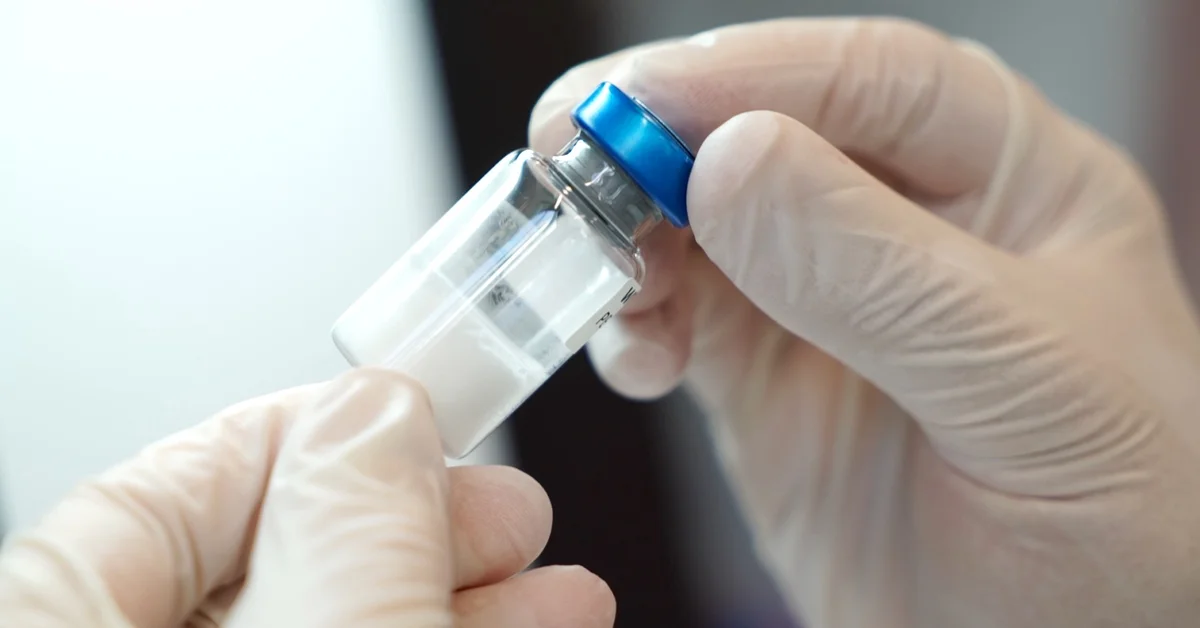
Is your lyophilization cycle a critical bottleneck, delaying your IND submission and increasing costs? Discover how spray drying provides a faster, more controlled, and scalable alternative for stable biopharmaceutical production. Learn how to speed up your development timeline.
Menu
Is Your Lyophilization Cycle the Critical Bottleneck in Your Path to IND?
From Days to Minutes: The Advantage of Spray Drying
An Action Plan for Less Risky, IND-Ready Formulation
Move Forward with Confidence
Is Your Lyophilization Cycle the Critical Bottleneck in Your Path to IND?
You've optimized the molecule and got through early-stage development. Now, the pressure is on to get a stable, scalable drug product ready for your CMC package. The industry-standard method, lyophilization, often becomes a big hurdle. Its multi-day cycle times, high energy consumption, and notorious scalability challenges can delay timelines and raise costs, putting your IND submission window at risk.[1, 21] For sensitive biologics, the freezing and drying stresses inherent in lyophilization can introduce aggregation and degradation, harming the very product you've worked so hard to advance.
You need a faster, more controlled, and scalable alternative that doesn't sacrifice stability.
From Days to Minutes: The Advantage of Spray Drying
Spray drying offers a strong and efficient option for producing stable, solid-state biopharmaceuticals. Unlike the batch-based process of lyophilization, spray drying is a continuous, single-step method that converts a liquid formulation into a dry powder in minutes, not days.[1, 21] This big reduction in processing time can really speed up your development timeline.
Quick Facts: Lyophilization vs. Spray Drying
Cycle Time: Lyophilization typically requires 24–72 hours per batch, whereas spray drying is a continuous process completed in minutes.
Scalability: Spray drying is an easily scalable process, allowing for an easier tech transfer from development to commercial manufacturing.
Cost-Effectiveness: The running costs of spray drying can be 4 to 7 times lower than freeze-drying because of shorter cycle times and lower energy consumption.[2, 5, 9]
Particle Engineering: Spray drying gives exact control over particle characteristics like size and density, which is key for specific delivery routes such as inhalation.[2, 5, 9]
This technology is not just for simple molecules. Advances in formulation science have made spray drying a good and often better option for complex biologics, including monoclonal antibodies, viral vectors, and even mRNA-based therapies.[1, 21][11]
An Action Plan for Less Risky, IND-Ready Formulation
Moving from a familiar process like lyophilization needs confidence and a clear, data-driven strategy. Leukocare provides the expertise to make this transition less risky and provide a scalable, stable, spray-dried formulation optimized for your specific molecule and timeline.
Predict and Optimize with High-Throughput Screening
Before committing to a lengthy development path, our AI-guided formulation platform predicts optimal excipient combinations to protect your molecule from the thermal and shear stresses of the spray drying process. We identify ideal stabilizers—such as trehalose, mannitol, or specific amino acids—that create a protective amorphous matrix, preserving your biologic's native structure and function.
Get Room-Temperature Stability and Eliminate Cold-Chain Dependency
A main result of a well-designed spray drying process is a stable powder with a high glass transition temperature, allowing storage at room temperature.[15, 16, 17] This gets rid of the big logistical costs and risks associated with cold-chain shipping and storage, a key advantage for global clinical trials and commercial distribution.[13, 19] Recent successes with spray-dried bacteriophages and vaccines have demonstrated long-term stability at 20°C for over a year.
Provide a Scalable, IND-Ready CMC Package
Our approach is based on Quality by Design (QbD) principles.[20] We carefully identify key process parameters—such as inlet temperature, feed rate, and atomization pressure—and their effect on key quality attributes like particle size, moisture content, and product stability. This makes sure the process is strong and consistent as you scale up, providing the detailed documentation required for a successful IND submission.[1, 21]
A recent success story involved stabilizing a recombinant human albumin protein. The resulting spray-dried powder was easier to handle and demonstrated nearly identical stability to the lyophilized version, validating the process as a better option.
Move Forward with Confidence
Don't let formulation bottlenecks control your development timeline. Spray drying offers a tested, efficient, and scalable way to a stable drug product. By partnering with Leukocare, you gain access to the extensive formulation expertise and advanced technology needed to handle this process with accuracy and control.
Schedule a strategy call with our formulation experts—accelerate your CMC timeline, reduce manufacturing risk, and get your therapy to the clinic faster.
[Accelerate Your CMC]
IND-ready · De-risked · Scale-tested · Room-temp optimized · No guesswork