scale-up-of-lyophilization-processes-for-biologics
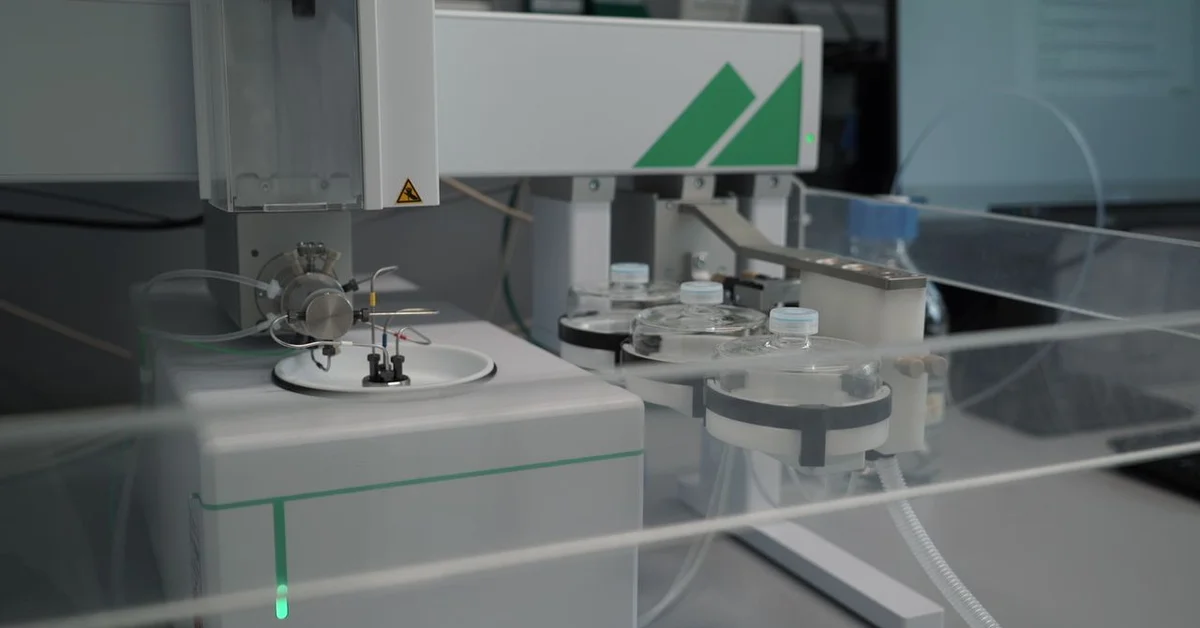
What if your perfect lab-scale lyophilization cycle fails catastrophically during your first GMP run? This common pitfall in biologics development can lead to months of delays and jeopardize IND submissions. Discover how to mitigate these risks and ensure a smooth scale-up process.
Menu
Why Your Lab-Scale Lyophilization Process Is a High-Risk Gamble for Your IND Timeline
The Pain of a Failed Scale-Up: More Than Just a Bad Batch
An Action Plan for De-Risked Lyophilization Scale-Up
Why Your Lab-Scale Lyophilization Process Is a High-Risk Gamble for Your IND Timeline
What if the lyophilization cycle that worked perfectly in the lab fails catastrophically during your first GMP run? For many CMC leaders, this isn't a hypothetical. The transfer from a small-scale, forgiving lab environment to a full-scale manufacturing setting is one of the most common and costly failure points in biologics development. A failed batch due to poor scale-up doesn't just mean the loss of expensive API; it means months of delays, pushing back IND submissions and putting financing milestones in jeopardy.
The Pain of a Failed Scale-Up: More Than Just a Bad Batch
You've spent months, even years, optimizing your biologic. It shows high efficacy and a promising safety profile. But the stability of these complex molecules is fragile. Lyophilization (freeze-drying) is the go-to solution for achieving long-term shelf-life and avoiding the immense costs and logistical burdens of the cold chain [1]. The path from a lab-scale cycle to a validated, commercial-scale process is filled with hidden risks [2, 3, 4].
The reality for many stressed and time-crunched CMC teams is a rude awakening during tech transfer. A cycle that produced an elegant, stable cake in a lab dryer results in vial breakage, cake collapse, or inconsistent residual moisture at scale. These failures often trace back to one root cause: differences in equipment performance and process dynamics between development and production scales are profound [6].
Key challenges include [7]:
Equipment Heterogeneity: Laboratory and manufacturing-scale lyophilizers have different designs that impact heat and mass transfer. This variability can dramatically alter process outcomes if not properly characterized [21, 22, 23].
Freezing Inconsistency: The freezing step is critical, but ice nucleation is often uncontrolled and inconsistent across a large batch, leading to variable pore sizes in the cake and affecting drying rates.
Lack of a True Design Space: A "trial-and-error" approach may work for a few dozen vials, but it doesn't create the robust, scalable process needed to satisfy regulatory bodies like the FDA. Regulators expect a deep understanding of how process parameters affect the final product [11, 12].
Every failed stability run or batch rejection forces you to re-optimize the cycle, consuming precious time and API [13, 14, 15, 25]. With IND submission windows tightening, a three-month delay can feel like an eternity.
An Action Plan for De-Risked Lyophilization Scale-Up
Success in lyophilization scale-up isn't about luck; it's about systematic, data-driven process design. By shifting from an empirical approach to a predictive, science-based one, you can build a robust process that scales reliably and meets regulatory expectations from day one. This method, based on Quality by Design (QbD) principles, turns process development from a gamble into a controlled, predictable workflow.
Quick Facts: The High Stakes of Biologic Stability [16, 19, 23]
Up to 50% of drugs in the clinical pipeline are biologics, many requiring lyophilization for stability.
Over 40% of biologic drug failures in clinical development are linked to stability issues like protein aggregation [7].
Cold-chain logistics for biologics are projected to cost the industry over $21 billion by 2024, highlighting the economic need for ambient-stable formulations [20].
1. Predict and Model Before You Scale [4]
To scale up successfully, you need to deeply understand your formulation's physical and chemical properties. Forget endless trial runs. Modern formulation platforms use predictive modeling and AI tools to plan the process. By figuring out critical temperatures, like the glass transition (Tg') or collapse temperature (Tc), you can set up a safe operating space before even loading the first vial into a pilot dryer. This way, you set crucial process parameters based on real data, not guesses, making sure the process is sturdy from day one [21, 22, 23].
2. Engineer a Scalable and Transferable Process
A scalable lyophilization cycle accounts for the real-world differences between equipment. The aim is to develop a process that works well in both your lab's small unit and the CDMO's big 300-liter chamber. This means creating a "design space", a scientifically proven range of settings (like shelf temperature or chamber pressure) that ensures a quality product. For example, an optimized process for a complex biologic like an AAV vector keeps stress on the capsid low during the cycle, protecting its potency and stability [16, 19, 23]. This QbD approach gives you the flexibility for smooth tech transfer and helps you avoid last-minute panic [24].
3. Deliver an IND-Ready Data Package
Regulators want proof you understand and control your manufacturing process. A process built on predictive modeling and QbD creates all the data you need for your CMC submission [13, 15, 25]. This includes documents that explain your chosen process parameters, show how robust the process is, and validate its consistency [27]. After one team switched to a data-first formulation strategy, they stabilized their AAV candidate at ambient temperature, making logistics easier and meeting IND requirements without delays [14, 25].
Don't let lyophilization scale-up be the bottleneck that derails your program. By replacing trial-and-error with predictive, science-driven formulation design, you can accelerate your timeline, reduce risk, and move toward your IND submission with confidence.
Ready to build a scalable, IND-ready lyophilization process?
Schedule a strategy call with our formulation experts. Accelerate CMC, reduce risk, and move forward with confidence.
Accelerate Your CMC
IND-ready
De-risked
Scale-tested
Room-temp optimized
No guesswork