de-risking-biologic-drug-development-timelines
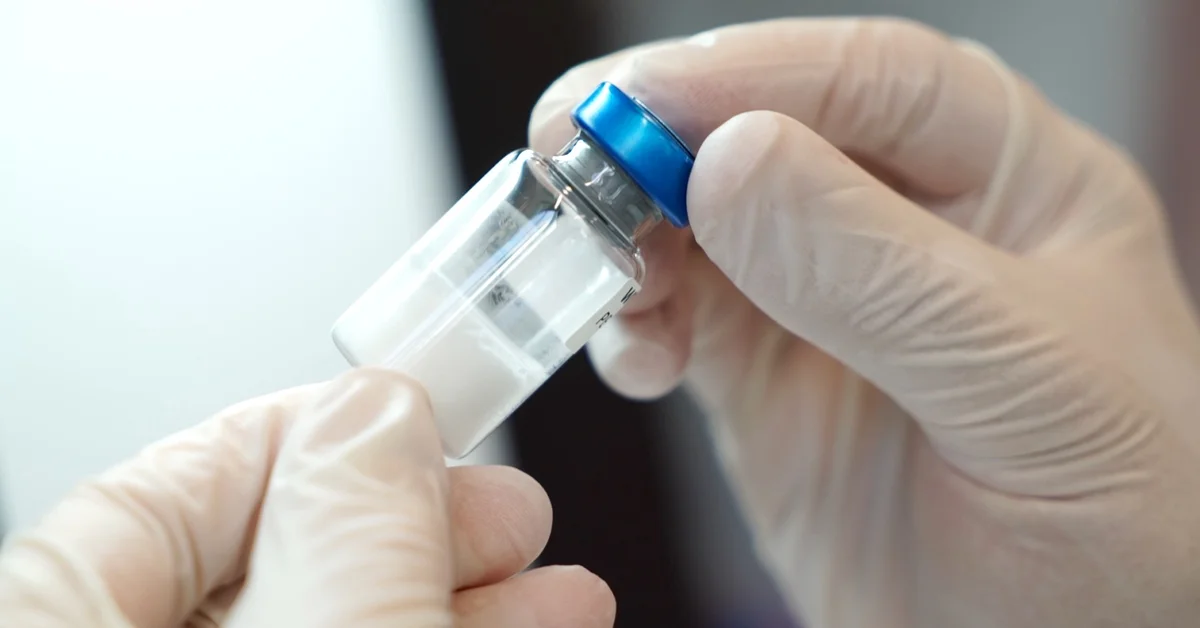
Predict formulation failures months in advance to avoid costly delays. This guide helps Directors of CMC in de-risking biologic drug development timelines and preparing for a successful IND submission.
Menu
Get Your IND Submission Ready: A Director's Guide to Avoiding Delays in Biologic Timelines
The High Cost of a "Wait and See" Approach
An Action Plan for Timeline Assurance
Move Forward with Confidence
Get Your IND Submission Ready: A Director's Guide to Avoiding Delays in Biologic Timelines
What if you could predict formulation failures three months before they happen? For a Director of CMC, where every delay directly impacts budgets and board-level expectations, predicting and preventing bottlenecks is not a luxury—it's a necessity. The path to a Biologics License Application (BLA) is full of risks, but the most preventable delays often originate from less-than-ideal formulation strategies.
The High Cost of a "Wait and See" Approach
You have optimized a promising molecule and handled the tricky parts of upstream development. Now, the pressure is on to get a stable, scalable, and commercially useful formulation ready for your Investigational New Drug (IND) submission. This is where timelines often fall apart. A single failed stability run can set a program back by months. Unexpected issues like aggregation, degradation, or high viscosity discovered during tech transfer can force costly reformulation and risk your submission deadline.
Biologics are naturally sensitive [1, 5]. Their complex structures make them easily affected by environmental stress at every stage, from manufacturing to administration [1, 5]. Traditional formulation development, which relies on repeated trial-and-error tests, is often too slow and resource-intensive to keep up with the tight schedules of a fast-track program [1, 5]. With Phase II clinical trials having the lowest success rate of all development phases—just under 29%—a robust and well-characterized formulation is key to not becoming just another failure.
The problems from unstable formulations aren't just in the lab [6, 7]. Over 85% of biologics require cold storage, and the global cost of pharmaceutical cold chain failures costs about $35 billion each year. A formulation that needs a strict cold chain makes things much more expensive and complex logistically [8], making it harder for patients to get and creating weak spots in the supply chain.
Quick Facts: The Formulation Bottleneck [10, 11, 9].
Success Rates: The overall likelihood of a drug candidate moving from Phase I to approval is just 7.9%. Many failures can be traced back to fundamental manufacturability and stability issues [6].
Cold-Chain Dependency: More than 85% of biologic drugs require temperature-controlled storage and transport, a major logistical and financial burden.
Failure Cost [8]: Phase III trial failures are the most expensive setbacks in R&D. Many could be prevented with better early-stage characterization and formulation design [7].
An Action Plan for Timeline Assurance
A modern, data-first approach can turn formulation from a timeline risk into a big plus. By using predictive technologies and a Quality by Design (QbD) framework, you can methodically reduce risks in your CMC package and speed up your journey to the clinic. This involves three key steps [12, 13, 14, 15, 16]:
1. Predict Developability with AI-Guided Design
Instead of just relying on physical screening, use predictive models to spot problems early. AI-driven platforms can analyze a molecule's sequence and structure to predict how likely it is to aggregate, oxidize, and break down in other ways. This lets you make decisions based on data on buffer conditions, excipient selection, and stabilization strategies before starting long lab work. By doing this analysis upfront, a process that used to take months of repeated tests can be shortened to weeks. This early insight is a key part of a practical biologics developability assessment, helping you move forward with a candidate ready for success.
2. Engineer for Real-World Stability
The main goal is a formulation that's not just stable, but also practical. This means making sure it lasts well in real-world conditions, including room-temperature stability. Advanced formulation platforms like Leukocare's SMART Formulation® use a mix of biophysical analytics and machine learning to quickly find excipient mixes that shield your molecule from stress, cutting down or getting rid of the need for strict cold-chain shipping. For example, after using this method, one team successfully stabilized their lead AAV candidate at room temperature, making the supply chain smoother and speeding up their CMC package by two months. This is where computer-based formulation design offers a clear way to a tougher and more marketable product.
3. Deliver a Scalable, IND-Ready Package
Regulators want you to really understand your product and how it's made. A data-based formulation strategy creates a full characterization package that helps your IND submission [12, 16]. This includes finding key quality features (CQAs) and setting up a strong design area, which is essential for the QbD approach. This makes sure your formulation isn't just stable in the lab, but also reproducible and can be scaled up, making for an easy tech transfer to your manufacturing partner [13, 14, 15]. By building quality in right from the beginning, you give regulators the confidence they need for a quick review, preventing questions that could stop clinical trials. These AI-powered drug product development solutions provide the solid data needed to move forward.
Move Forward with Confidence
In today's competitive world, speed and certainty are super important. Counting on old, reactive formulation methods adds needless risk to your development timeline. By using a predictive, data-driven strategy, you can foresee challenges, make smarter choices quicker, and create a strong CMC package that stands up to regulatory review.
Control your timeline. Set up a call with our formulation experts to speed up your CMC, lower risk, and ensure your IND submission path.
[Accelerate Your CMC]
IND-Ready Packages
De-Risked Timelines
Scale-Tested Formulations
Room-Temp Optimized
No Guesswork