contract-research-formulation

Are formulation bottlenecks delaying your drug development? Imagine predicting months of stability testing in just weeks, de-risking your CMC plan and accelerating your path to market. Discover how a modern, data-driven approach to contract research formulation can transform your timeline.
Menu
What if Three Months of Stability Testing Could Be Predicted in Three Weeks?
An Action Plan for De-risked Formulation Development
Move Forward with Confidence
2. Optimize for Room-Temperature Stability to Reduce Cold-Chain Dependency
3. Deliver an IND-Ready Package That Scales
What if Three Months of Stability Testing Could Be Predicted in Three Weeks?
If you're leading CMC or Drug Product Development, you're constantly making big decisions under pressure. With an IND submission deadline looming, the last thing you want is a formulation bottleneck. Things like aggregation, viscosity issues, or poor shelf-life can delay timelines, add costs, and jeopardize your entire clinical program. You've optimized the molecule; now, you need to make sure it's stable and manufacturable without losing valuable time.
Every failed stability run costs months and significant resources. You're under a lot of pressure to show investors and regulators a strong CMC plan, but typical formulation screening can be slow and repetitive. For complex biologics like viral vectors or monoclonal antibodies, these challenges get even bigger. Degradation pathways are numerous, and making sure something is stable from the lab to the clinic—and eventually to the patient—is a critical hurdle.
The biopharmaceutical industry loses an estimated $35 billion each year from failures in temperature-controlled logistics alone. Much of this cost comes from formulations that rely on a strict cold chain. What if you could design a formulation optimized for room-temperature stability from the start?
An Action Plan for De-risked Formulation Development
A modern, data-driven way to approach formulation can help avoid these problems, speeding things up and making you more confident in your drug product. By moving beyond just trying things out, you can create a scalable, regulatory-sound formulation with much more precision. This strategy is built on three core pillars.
Quick Facts: The Formulation Bottleneck
Costly Delays: Nearly 70% of surveyed drug development experts report delays in clinical trials or product launches due to formulation challenges.
Stability is Paramount: Biologics are inherently unstable, and issues like aggregation can compromise safety and efficacy.
Cold-Chain Dependency: Global spending on biopharma cold chain logistics is projected to reach $21.3 billion by 2024, a significant operational cost that can be reduced with thermally stable formulations.
1. Predict Developability with AI-Guided Design
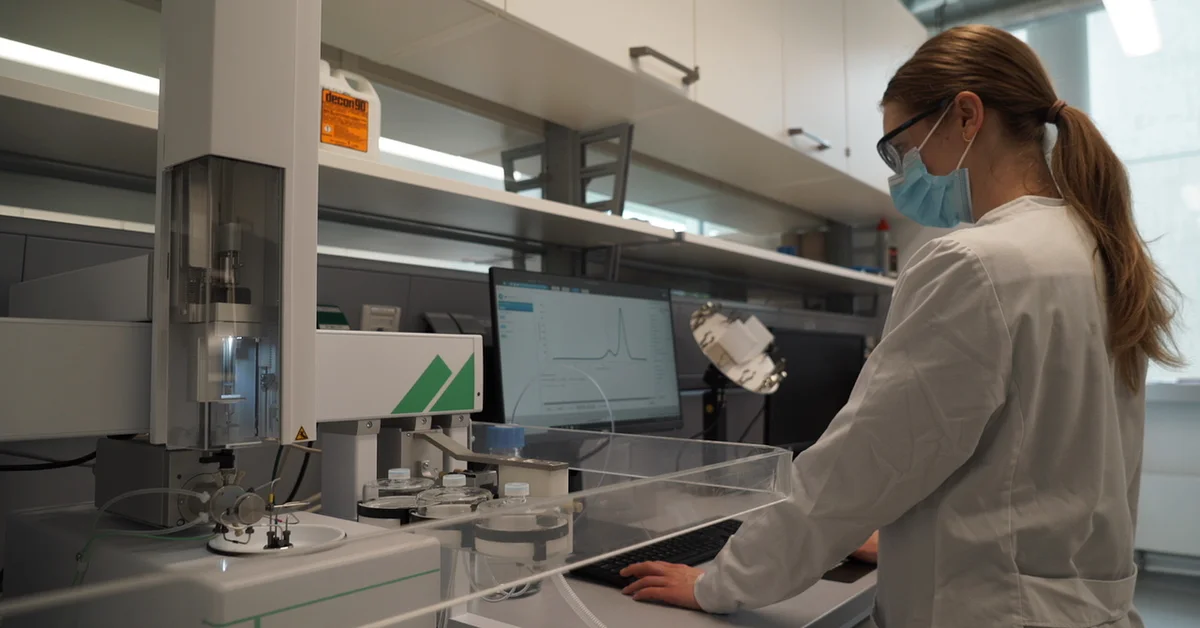
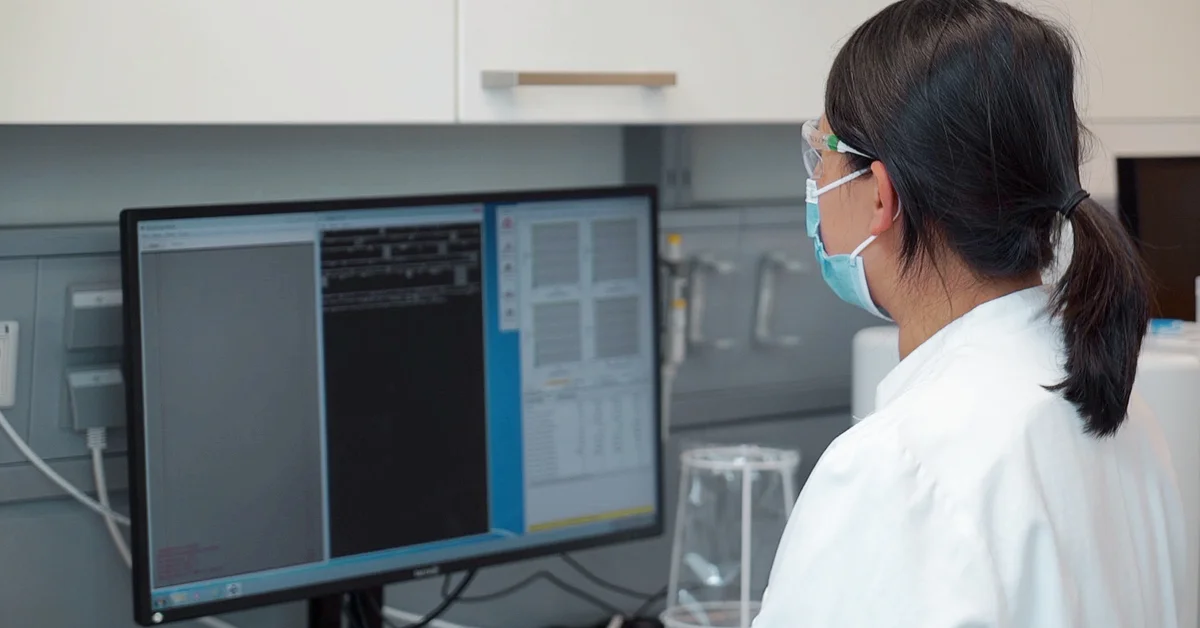
Instead of just trying things out, predictive modeling can quickly and accurately find the best excipients and buffer conditions. Artificial intelligence platforms analyze vast datasets to forecast how specific amino acid sequences will behave in different chemical environments. This allows for the early identification of degradation pathways and aggregation risks.
A machine learning-guided approach to excipient selection helps pinpoint stabilizers, surfactants, and other components that protect the molecule’s integrity. Getting this data science done early reduces the number of required physical experiments, saving months of development time and precious drug substance.
2. Optimize for Room-Temperature Stability to Reduce Cold-Chain Dependency
Formulations that hold up well at room temperature make logistics easier and cut down on long-term costs. For biologics, especially those requiring self-administration, getting rid of strict cold-chain rules is a huge plus. A primary strategy to achieve this is lyophilization, or freeze-drying, which removes water to halt degradation pathways and improve shelf-life.
Making a good freeze-dried formulation means carefully designing the cycle and picking cryoprotectants like sucrose or trehalose to stop damage during freezing and drying. This is especially important for delicate things like viral vectors, where keeping them infectious is key.
Advanced techniques can produce stable, freeze-dried products tough enough for worldwide shipping without needing frozen storage.
3. Deliver an IND-Ready Package That Scales
Your formulation needs to be stable, but also something you can actually make and scale up. A Quality by Design (QbD) approach bakes quality, safety, and effectiveness into the formulation and manufacturing process right from the start. This organized method really focuses on understanding and controlling the process, which is super important for a good IND submission and easy tech transfer later.
Your IND application's CMC section needs detailed info on how your drug product is made, produced, and quality-checked. A well-understood, stable formulation backed by solid data means fewer questions from regulators and no expensive holdups. A data-driven development process makes sure your formulation isn't just a good idea on paper, but actually works for big production runs.
Move Forward with Confidence
You really can't let formulation problems mess with your clinical timeline. By taking a predictive, data-first approach, you can speed up your CMC program, lower risk, and create a drug product that's set up to win. A smart contract research partner can give you the special tech and know-how to handle these tough issues, delivering a stable, scalable, and IND-ready formulation.
Schedule a strategy call with our formulation experts—accelerate CMC, reduce risk, and move forward with confidence.
Get Expert Help
IND-ready
De-risked
Scale-tested
Room-temp optimized
No guesswork